By IDPro Editorial Team
Every critical system in engineering has a kill switch.
- Power grids
- Trading systems
- Manufacturing lines
- Cloud infrastructure
- Even spacecraft
When something goes wrong, there is a way to stop the system immediately but not gracefully, not perfectly, but decisively.
Identity does not have one.
And that omission is becoming one of the most dangerous design flaws in modern security.
The Dangerous Assumption We Built Identity On
Most identity systems are designed around a single idea,
Trust should persist unless explicitly revoked.
So we authenticate users.
We issue sessions and tokens.
We grant permissions and roles.
And then we wait,
We wait for,
- Tokens to expire
- Sessions to time out
- Passwords to rotate
- Reviews to catch anomalies
- Humans to notice something is wrong
That works fine in normal operations.
It fails catastrophically during an active attack.
What This Looks Like in the Real World
Consider this moment common, quiet, and devastating.
At 02:14 AM, a valid session token belonging to an engineer is reused from an automated environment.
The login was legitimate. MFA passed hours ago.
Over the next 11 minutes, that token is used to access systems the engineer has never touched before, trigger API calls at machine speed, and inherit delegated permissions across cloud services.
Alerts fire. A security analyst sees suspicious behavior.
But identity keeps working.
Tokens remain valid. Sessions persist. Trust continues to flow.
By the time the account is disabled, the attacker is already somewhere else using a different identity, a different token, a different trust path.
This is not a detection failure.
This is a containment failure.
Attacks Move Faster Than Identity Can React
Modern identity breaches don’t unfold over weeks.
They unfold over minutes.
Once an attacker gets a valid identity foothold,
- Tokens are minted
- Sessions are established
- APIs are callable
- Privileges begin to expand
- Automation accelerates movement
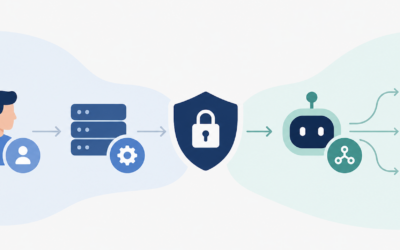
At that moment, identity becomes a distribution system for trust.
Security teams can see the problem.
They can raise alerts.
They can escalate tickets.
But identity keeps functioning exactly as designed.
There is no equivalent of “Stop all trust. Now.”
Revocation Is Not a Kill Switch
This is where many teams push back.
We can disable the user.
We can revoke tokens.
We can remove roles.
All true.
All too slow.
Revocation assumes,
- You know which identity is compromised
- You know which tokens are active
- You know where trust has propagated
- You can act faster than the attacker
In real incidents, none of those are guaranteed.
Revocation is surgical.
A kill switch is containment-first.
What a Kill Switch Actually Means in Identity
A kill switch is not a button.
It’s a design philosophy.
It means identity systems must support a mode where,
- Trust can be globally constrained
- Privilege expansion can be frozen
- Sessions can be shortened instantly
- Delegation paths can be paused
- High-risk actions can be temporarily denied
Not forever.
Not blindly.
But fast enough to stop blast radius growth.
Think of it as identity emergency braking.
Why We Avoid Building It
There are three uncomfortable reasons identity lacks a kill switch.
1. Availability Fear
Identity teams worry, what if we break the business?
So systems are optimized for continuity even during attacks.
2. Ownership Confusion
Who is allowed to pull the switch? Security? IAM? IT? Executives?
When authority is unclear, capability never gets built.
3. Static Design Thinking
Identity was built for planned access, not adversarial behavior.
Kill switches belong to systems designed for failure.
Identity still assumes success.
The Cost of Not Having One
Without a kill switch,
- Attacks scale laterally instead of stopping
- Incidents turn into breaches
- Containment happens after damage
- Trust continues flowing to the attacker
Most post-incident reviews quietly reveal the same truth, we saw it happening but couldn’t stop identity fast enough.
That’s not an alerting problem.
That’s a control-plane problem.
What Forward-Looking Identity Programs Are Starting to Do
The most mature organizations are shifting their thinking,
- Designing identity for emergency modes, not just steady state
- Separating availability from trust propagation
- Pre-defining blast-radius limits, not discovering them during incidents
- Treating identity like infrastructure, not policy
They accept a hard truth,
Temporary friction is cheaper than uncontrolled compromise.
The Real Reframe
Identity doesn’t need to be perfect.
It needs to be interruptible.
Because every other critical system already learned this lesson:
If you can’t stop it, you don’t control it.
Identity Unlocked Insight
If your identity system can’t slow down, constrain, or pause trust during an attack,
then identity isn’t a control plane it’s an accelerant.
The future of identity security isn’t just better authentication.
It’s designed containment under pressure.
And that starts with a kill switch.